
Reviewed · RILA MONASTERY TOURS
Rila Monastery: Complex Smartphone Audio Guide
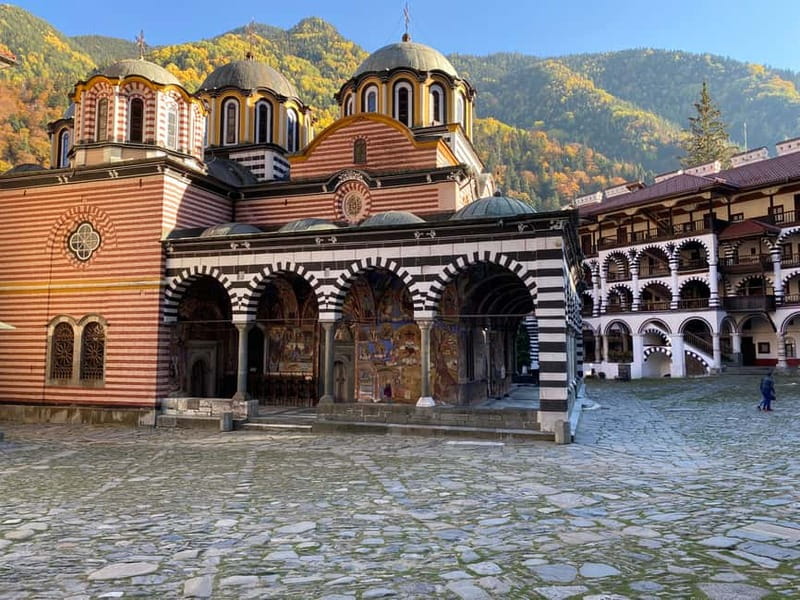
Rila Monastery is interesting because it is one of Bulgaria’s biggest heritage landmarks, and it mixes jaw-dropping church art with a lived-in monastic feel. This smartphone audio setup lets you wander the complex in your own rhythm, guided by 15 timed audio stops you trigger as you arrive.
I like two things right away. First, the audio guide approach is practical: you dial the number when you get to each point, so you do not feel lost or stuck in a rigid group march. Second, the guide hits the big must-knows, including why the monastery is on the UNESCO World Heritage List and the 12th-century Bulgarian Orthodox Church shrine. The one possible drawback is simple, but important: the access link is time-limited and you will need a charged phone plus internet and headphones, especially inside temples.
Quick highlights you will actually use
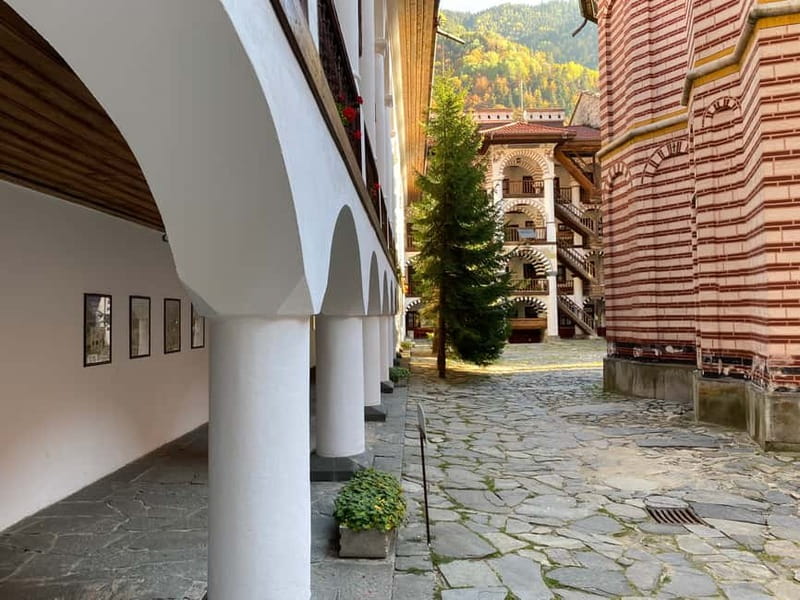
- UNESCO context on the spot so you understand what you are seeing, not just that it is famous
- 15 numbered audio entries that map to physical locations, with a total runtime of about 1.5 hours
- Mekitsa snack time included as part of the experience, because a monastery visit should include local comfort food
- 7-language audio guide (Bulgarian, French, English, German, Russian, Italian, Spanish)
- A territory map of the monastery to help you plan your walk and keep your bearings
Rila Monastery by smartphone: what this experience really feels like
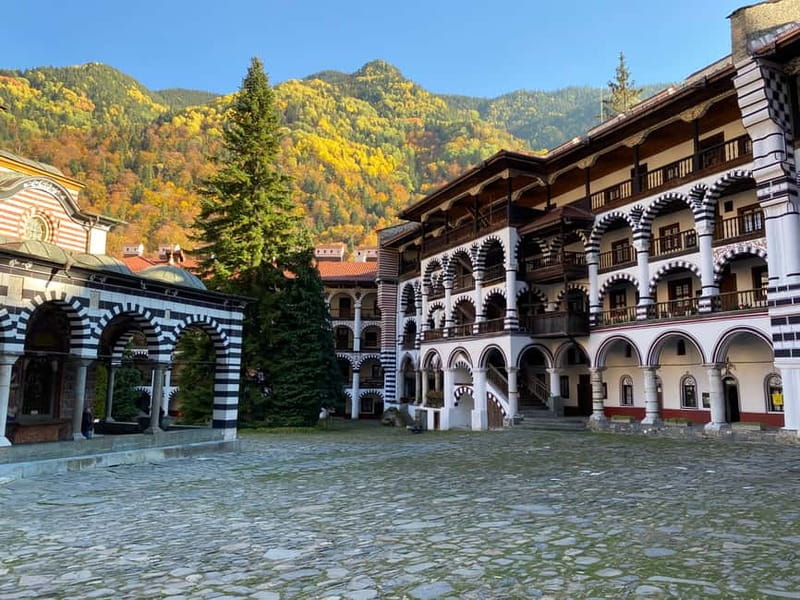
I like travel that respects your pace. Here, you are not trapped in a tour tempo. You pay once, then you explore the Rila Monastery complex on your own, using a map plus an audio guide that you start at the right moments.
The method is straightforward. As you approach the next point, you dial its number and playback begins. That design matters more than it sounds. At a complex site, the hardest part is often orientation, not information. Numbered points reduce the “where do I go now?” stress, so you can focus on details like church interiors, icons, and the monastery layout.
Another thing I appreciate is the language range. If you are traveling with friends or family who speak different languages, the guide includes English, French, German, Italian, Spanish, Russian, and Bulgarian. You can all listen in your own language instead of crowding around one device.
The visit is built for about 1.5 hours of audio across 15 entries, but you are still free to spend more time if something catches your eye. Real heritage sites reward slow looking, and this format does not fight you on that.
Other ways up the valley to Rila:
- Rila Monastery Super Saver: 3 Stops + Free Pickup
★ 4.4 · 79 reviews - From Sofia: Rila Monastery & Boyana Church Day Tour
★ 4.7 · 5,107 reviews
Before you go: the gear and rules that affect your day
This is a smartphone audio guide, so the boring setup details decide whether your visit feels smooth or stressful.
You should bring:
- A charged smartphone
- Internet access
You will need headphones for listening in temples. That is a big deal here. Outside you can usually tolerate spotty audio, but inside church spaces, you want clean audio and stable connectivity.
You also need to follow site rules on clothing and belongings. Avoid:
- High-heeled shoes
- Shorts and short skirts
- Bare feet
- Pets
- Luggage or large bags
One more key note: this experience is not suitable for wheelchair users. If mobility access is important for your group, plan an alternative way to experience the site comfortably.
Price and value: why $5 can be a good deal here
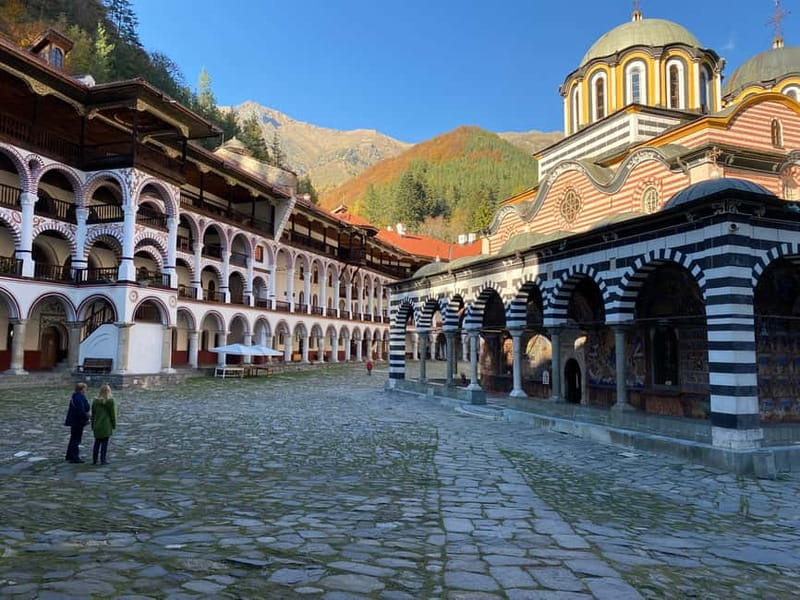
At around $5 per person for a self-guided day visit, you are paying for two concrete things: the audio guide in multiple languages and a map of the monastery territory. You are not paying for transportation or a live guide. That means the value depends on whether you will actually use the audio properly.
In my view, this price makes sense when you want to:
- learn as you walk (especially the UNESCO background and the 12th-century shrine context)
- avoid waiting for a group
- control your timing, including when you stop for food
It is less of a bargain if you hate tech on the road or you know your phone struggles with internet inside churches. If your signal is weak and you cannot use headphones comfortably, you might lose some of what makes the guide useful.
The UNESCO story you will hear as you move through the complex
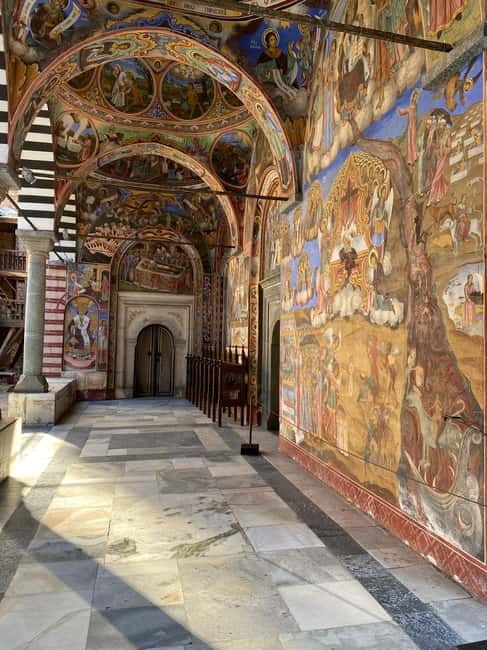
One of the strengths of this audio guide is that it gives you the “why” while you are physically there. The monastery is listed on UNESCO’s World Heritage register, and the guide is designed to explain that inclusion in a way you can connect to what you see.
What I like about getting UNESCO context on site is that it helps you stop treating the monastery like a postcard. Instead of just admiring the structures, you start noticing what makes them significant. You can listen, then look again with fresh understanding.
The UNESCO portion also acts like a mental anchor. When you later hear more specific history, like the older shrine, the big picture already makes sense. That reduces the feeling that the visit is just a sequence of disconnected facts.
The 12th-century shrine moment: the part you should not rush
You will also focus on the most ancient shrine tied to the 12th-century Bulgarian Orthodox Church. This is the kind of stop that can feel overwhelming if you are just staring at architecture and assuming everything is equally important.
Here, the audio guide gives you a reason to slow down. You are not only looking at old stone and sacred art, you are learning what to pay attention to and why that moment matters historically.
If you want to get the most out of this section, do this simple routine:
1) Stand where the shrine is fully in view
2) Listen once through
3) Look again after the key point lands
That extra look is where the information turns into understanding.
Temple listening: headphones and internet are part of the plan
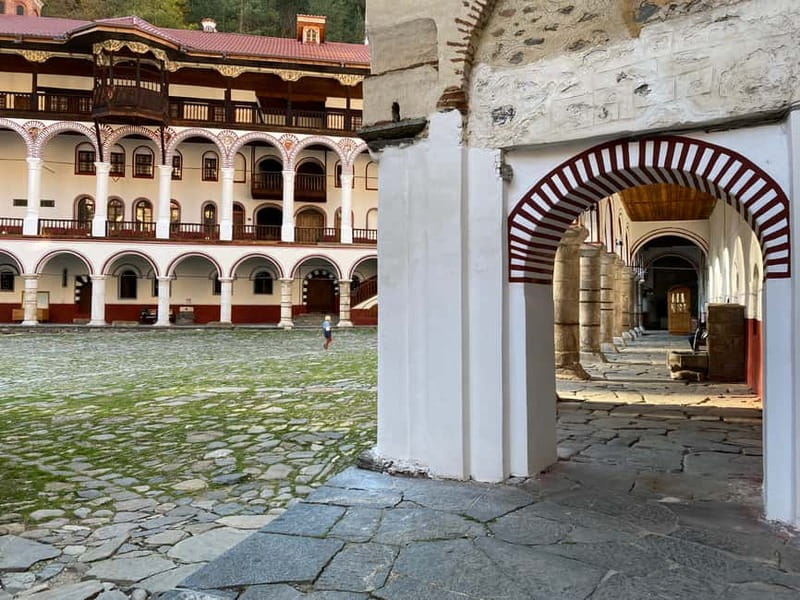
Inside temples, the guide explicitly needs internet and headphones. That is not a suggestion to ignore. If you show up without a charged phone or you go in with your battery already at 20 percent, you will likely feel rushed and frustrated.
I treat this as a common sense checklist for any church interior audio or video setup:
- Charge the phone fully before you leave
- Carry basic headphones you actually like using
- Be ready to pause if the connection stutters
Also, remember the guide is active only for a limited window on your chosen day. The access link becomes active on the excursion day and stays valid for 24 hours. If you plan to visit later in the day, make sure the timing fits your schedule.
How the 15 audio stops work in real life
The tour is built from 15 entries, with a total listening time of about 1.5 hours. Each entry connects to a specific point in the monastery complex.
Here is how I recommend you handle it:
- Save the audio link access before you arrive, so you are not scrambling
- Walk to the first point, dial the number, and press play
- Move on at a pace that lets you listen without constantly stopping and restarting
You do not need to speed through every entry to get value. If you miss one, you can still continue, but I would not recommend trying to multi-task. Monastery audio works best when you give it the small respect of your full attention for those moments.
Mekitsa at Rila Monastery: why the snack is more than a snack
You can also enjoy the monastery’s delicious mekitsa, Bulgarian donuts. This is one of those “small included joys” that improves the whole visit.
I like that the experience does not treat food like an afterthought. When you see a highlight tied to a local favorite, it reminds you that heritage places have everyday life, not just ceremonies and stonework.
Even if you do not make mekaitsa a long stop, it gives you a natural break point. Use that pause to rehydrate, reset your phone, and refocus for the next audio entry.
Getting the map of the territory: the best way to avoid backtracking
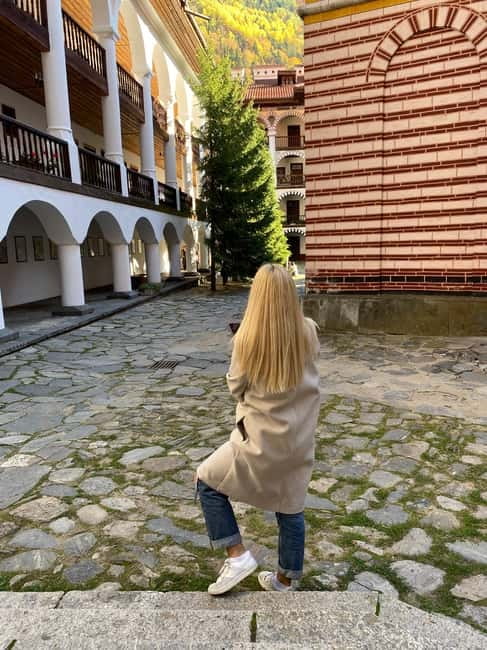
The experience includes a map of the territory of the monastery. At a site like this, maps are not “extra.” They are how you save time and keep your head clear.
My practical tip is to check the map before your first audio entry, then use it lightly. Do not stare at it constantly. Instead:
- orient once
- walk with purpose
- let the numbered audio points guide micro-decisions
That way you benefit from the map without turning the visit into a navigation exercise.
Language support: choose one and stick with it
The audio guide supports Bulgarian, French, English, German, Russian, Italian, and Spanish. That is excellent for independent travelers, especially if you do not want to rely on a shared group language.
If you are traveling with someone, pick one language per person, then keep each person listening separately. It avoids the common problem where one device becomes the bottleneck.
For the best experience, I would also recommend you download access and test playback early. One of the frustrations shown in past failures is download or access hiccups. If you can confirm things are working on your phone before entering temples, you avoid that problem.
What I’d watch out for, based on real usability signals
Not every day runs perfectly with tech, and the guide’s smartphone format means you need to be realistic.
The biggest friction points to be aware of are:
- Sometimes audio access and download can fail if you switch devices or your phone connection is unstable
- Sometimes the audio guide experience can feel incomplete if you cannot find where you should start playback
My best advice is to treat the first 10 minutes as a setup phase. Get the link working, confirm audio playback, and then commit to the walk. Once the guide is playing smoothly, everything else tends to click into place.
Who this guide suits best, and who should think twice
This experience suits you if you:
- want independence and pacing control
- like learning with short, targeted audio stops
- are comfortable using your phone for directions and media
- can manage internet and headphones at least inside temples
It might be a mismatch if you:
- have low battery habits or know your phone battery drops fast
- hate relying on internet inside religious spaces
- need wheelchair accessible routing at the site, since this is not suitable for wheelchair users
For most people, though, this is a strong way to experience Rila Monastery without feeling tied to a schedule.
Should you book it for your Rila Monastery day?
Here is my honest take. You should book this smartphone audio guide if you want an affordable, structured way to learn the meaning behind what you are seeing. The $5 price feels fair because you get a map and guided content across 15 stops, in seven languages, timed to a visit length of about 1.5 hours.
I would skip it if your phone reliability is questionable, because you will need internet and headphones in temples and the guide relies on an access link that is time-bound to your chosen day.
If you are comfortable with basic phone use, this is a smart, low-cost way to enjoy a UNESCO-class site with less stress and more understanding as you go.
FAQ
How long is the Rila Monastery smartphone audio guide?
The audio tour includes 15 entries and the total audio duration is about 1.5 hours.
Where is the tour located?
It is in Kyustendil Province, Bulgaria.
How much does it cost?
The price is $5 per person.
Do I get a map with the experience?
Yes, you receive a map of the territory of the Rila Monastery.
What languages are included in the audio guide?
The audio guide is available in Bulgarian, French, English, German, Russian, Italian, and Spanish.
How do I access the audio files?
After paying, you get a link by email to access the audio files. On the day of your excursion, the link becomes active and stays valid for 24 hours.
How do I start each part of the guide?
When you approach an object, you dial its number and start playback.
Will I need internet and headphones?
Yes. You need internet and headphones to listen to recordings in temples.
What clothing or items are not allowed?
High-heeled shoes, shorts, short skirts, bare feet, pets, and luggage or large bags are not allowed.
Is this experience wheelchair accessible?
No, it is not suitable for wheelchair users.
More Audio Tours in Kyustendil
- Nessebar: Audio Guide Tour Nessebar + visit to the Winery
★ 3.7 · 30 reviews - Plovdiv: Old Town Self-Guided Audio Tour
★ 3.6 · 24 reviews - Plovdiv Old Town Self-Guided Audio Tour
★ 4.5 · 6 reviews - Sofia Audio guide Tour offers available in 7 languages
★ 3.5 · 3 reviews
More Self-Guided Tours in Kyustendil
- Sofia: City Monuments Guided Walking Tour with Audio Guide
★ 4.5 · 825 reviews - Rila Monastery and 7 Rila Lakes Self-Guided Shared Trip from Sofia
★ 5.0 · 280 reviews - Sofia: Rila Monastery & Boyana Church – Audio guided tour
★ 4.6 · 91 reviews - From Sofia: Plovdiv with audio guide + free pick-up
★ 4.9 · 48 reviews
Written up most recently in Kyustendil
- Sofia, Pancharevo lake+Iskar river, guided. Pick up drop-off★ 5.0 · 5 reviews
- Rila Monastery Super Saver: 3 Stops + Free Pickup★ 4.4 · 79 reviews
Rila Monastery Tours, compared.

Must-See Rila Monastery & Boyana Church Day Tour
Read our review →
7 Rila Lakes and Rila Monastery Extended Trip
Read our review →

Rila Monastery & Optional St. Ivan Cave Day Tour
Read our review →
Browse the lists this tour appears in