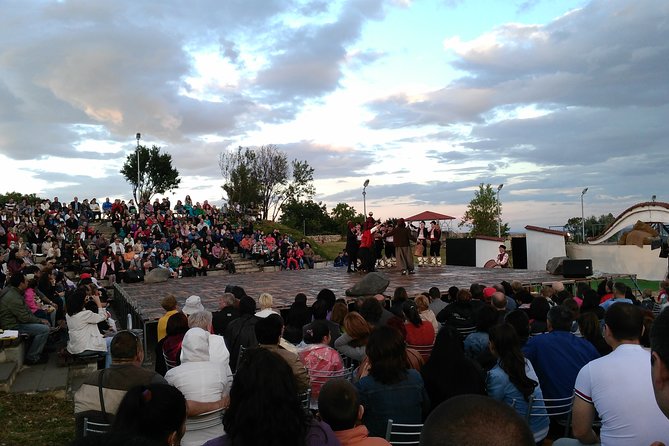
Reviewed · TOURS
Skip the Line: Medieval Tuida Fortress tours
Tuida Fortress is interesting because it is a whole timeline you can walk through, from Roman rebuilding to Bulgarian rule, then into early Christian worship. The ruins sit just outside Sliven and feel like they were built in layers, not erased and replaced.
I especially like the hands-on activities (archery and medieval dresses when you book the option). I also like that you can get English guiding and an e-guide, which helps the site make sense instead of feeling like random stones in the sun.
One possible drawback: from the outside, Tuida may not look instantly dramatic. And if you skip the guiding portion, you can end up with a frustrating walk where signage is hard to read and the route feels less cared for.
Key Things I’d Focus On Before You Go

- Tuida’s past is layered: Roman rebuild, Bulgarian settlement, then a long run of Early Christian religious use.
- Archery and medieval dress options turn the ruins into a more active, family-friendly experience.
- Guiding is what connects details like inscriptions, pedestals, and the cult complex to a clear story.
- The standout interior features include a unique baptistery decorated with murals and mosaics.
- Group size is capped at 50, so it’s not a stampede.
- Mobile ticket and photo time keep the visit simple and more flexible.
Entering Tuida Fortress in Sliven: why the walk matters
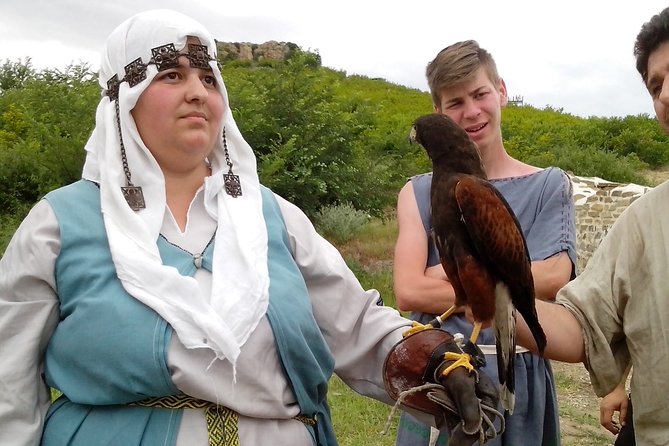
Tuida Fortress is in Sliven, Bulgaria, and the visit is built around exploring the remains within the fortified area (about 40 decares, roughly 10 acres). Even if you are not a hardcore archaeology person, the layout helps you get your bearings quickly once you have context.
Inside, you can expect to see the fortress walls, plus towers and gates. There are also remains of buildings, so you get more than a few straight wall segments. The site includes signs and archaeological elements, but the key is how you read them, and that is where an on-site guide and the e-guide can make a real difference.
A practical note: wear comfortable shoes. The ground inside ruins and along outdoor sections can be uneven, and the sun can make older signage harder to see. If you want an easy visit, go prepared to walk.
Before you settle on this one, put it beside the rest of Sliven:
- Private Access Rose Festival Kazanlak 05-07.06.2025
★ 4.5 · 6 reviews
The big story you can see: Romans rebuilt, then Bulgarians reshaped Tuida
Tuida is famous because it keeps getting rebuilt, then lost, then rebuilt again, as new powers arrived.
Here’s the sequence to keep in your head as you walk:
- In 378 AD, the fortress avoided destruction during the invasion of the Goths.
- It was later destroyed in the 5th century during invasions by the Huns.
- It was rebuilt during the reign of Roman Emperor Anastasius I (491 to 518 AD), preserving older architecture while enhancing it.
- The fortress was ultimately destroyed around 598 to 599 AD, likely during an invasion connected with Avars and Slavs.
Then comes the Bulgarian chapter. The territory around today’s Sliven became part of the First Bulgarian Empire after around 705 AD, when Bulgarian Khan (or Kanas) Tervel gained the Zagore Region south of the Balkan Mountains. A Bulgarian settlement, whose name is not confirmed, was built on the fortress site.
As you’re touring, try to notice how the Bulgarian rulers didn’t just occupy the place. They repaired and upgraded it:
- fortress walls and an aquaduct were rebuilt
- new buildings inside were covered with marble slabs made by stone cutters in Veliki Preslav, the Bulgarian capital
- bricks with an Ancient Bulgar sign, said to resemble |Y|, were found
- written sources indicate Tuida served as the seat of a bishop from the 4th century AD onward
That mix is why this visit feels different from a single-era monument. You’re not just looking at one time period. You are seeing how power, religion, and daily life kept shifting on the same ground.
What’s inside the walls: towers, pedestals, inscriptions, and the market clue
Fortress sites can feel cold when you only see defensive stone. Tuida adds something better: evidence of life happening in and around it.
Within the fortified area, excavation work has revealed:
- walls, fortress towers, and gates
- remains of buildings
- two marble pedestals dedicated to gods Apollo and Zeus
- a 3rd century AD inscription describing the settlement as a market place
That market-place line is a good mental hook. If you remember it, Tuida stops being only about battles and turns into a place where people gathered to trade and worship, long before the later religious buildings took over.
You may also hear the fortress named as Tuida or Suida, and known in written sources as Tsoida. That matters because it helps you understand why the same location shows up in different forms across documents. It is one of those small details that makes you feel like you are reading the site correctly.
The Early Christian cult complex and the unique baptistery
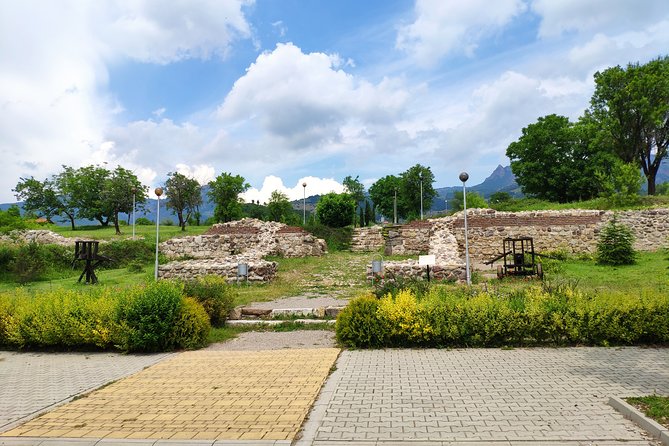
If you want the strongest visual payoff, focus on the religious complex used across a long stretch of time, from the 4th to the 13th century.
The cult area includes:
- an Early Christian basilica described as three-nave with one apse
- a unique baptistery decorated with murals and mosaics
A longer religious life like this often means a few things. It usually suggests the site stayed important to local communities, not just to a ruling power. It also means you can see more than one layer of spiritual architecture in the same footprint.
There is also mention of a larger basilica outside the fortress walls. That tells you the settlement was not limited to the fortified area. In other words, people lived beyond the walls, not only behind them.
If you have kids, this is also where the stories tend to click. You can talk about why baptism mattered, why images and mosaics were used, and why buildings kept being maintained even after older political eras disappeared.
Archery, medieval dresses, and photo time: make the ruins more fun
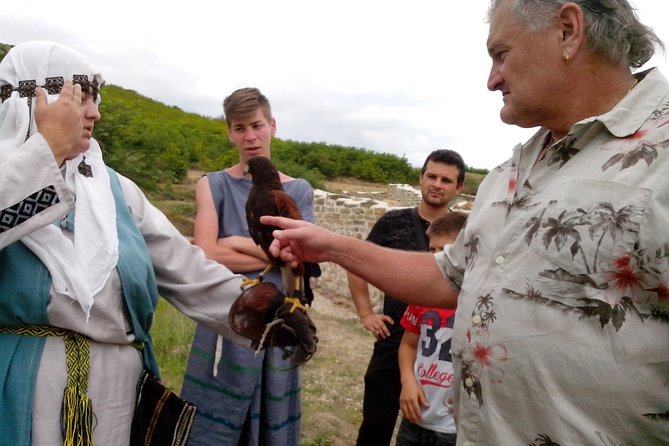
This tour can include activities that change the energy of the day: archery and medieval dresses are offered if you book that option.
I like this part because it turns the visit from passive seeing into active doing. When you dress up, you get a physical sense of costume and identity, even if it is obviously a modern interpretation. When you try archery, you understand that the fortress era had practical training and games, not just drama.
The experience also includes taking photos and an e-guide. That combination is useful. You get a way to document the day, and the e-guide helps you connect what you see while you are still standing in front of it.
If you’re traveling with children, or you simply want a less lecture-heavy tour, this is likely the highlight. One review specifically praised the presence of entertainment for younger people like medieval games, alongside archery and dressing up.
Why the guide changes everything at Tuida

Tuida can be fascinating, but it does require interpretation. The difference between a good visit and a frustrating one often comes down to whether you have someone guiding you through the site.
I’d treat this as your main decision point:
- If you book guiding, you get explanations that tie together inscriptions, architectural pieces, and multi-era dates.
- If you do not, you might end up walking among walls and scrub with signs that are hard to read in strong sunlight.
One person described the frustration of arriving and finding the place underwhelming without a guided visit. The response pointed out that Tuida is excellent with a guide, because that is how you understand what you are actually seeing.
So here is my practical advice: if you are even slightly unsure of what you are looking at, choose the guiding option when available. You will get more out of the time you spend on site.
And if you do want to learn, ask questions as you go. The best moments tend to happen when the guide connects an artifact or building feature to the larger story, instead of listing facts.
Walking time, comfort, and what to pack for the day

The duration is listed as about 1 day. That makes Tuida a strong “one-stop” half to full day activity if you’re already in Sliven.
Because the experience is outdoors and you are moving across ruins, plan for:
- comfortable shoes (this is explicitly recommended)
- some kind of plan for sun, since outdoor signage can be hard to read when bleached by daylight
- water and snacks, because food and drinks are not included
Most travelers can participate, and service animals are allowed, which is helpful for people who need that support.
If you want the easiest experience, build in time to slow down. The site is layered, and part of the enjoyment is noticing how one era’s additions sit on top of another.
Price and value in Sliven: what you get for $8.16
The price is listed as $8.16 per person, and the admission ticket is noted as free. That can make the package feel like a bargain, but it also means you are paying mainly for the experience elements tied to the tour program, not for entrance fees.
Here’s what is included:
- archery and medieval dresses if that option is booked
- guiding if that option is booked
- taking photos
- E-guide
What is not included:
- food, drinks, and personal expenses
Value-wise, I think the best “deal” comes from choosing the add-ons that match your style:
- If you want a more lively visit, book archery and medieval dresses.
- If you want the most understanding per minute, book guiding so the stones become a story instead of a puzzle.
- If you just want the site plus self-paced help, the e-guide and photo time can still be useful, but you may feel less grounded without a guide.
Also note the size cap: maximum 50 travelers. That’s big enough to feel organized and energetic, but small enough that you are not lost in a crowd.
Who should book this Tuida Fortress experience
Tuida works best for you if:
- you like sites where multiple eras overlap on the same ground
- you enjoy hands-on activities like archery and dress-up
- you want English guidance so inscriptions and features make sense
- you are visiting Sliven and want a memorable, cultural stop that goes beyond a quick photo
It may be less satisfying if you are expecting a modern, polished attraction. The fortress is a ruin, and the outer look can be plain. The pay-off increases when you have context and you use the guiding and e-guide options.
For families, this is a strong fit because there are entertainment elements geared toward younger visitors, not just adult lecturing.
Should you book Tuida Fortress in Sliven?
Book it if you want a day that blends real ruins with activities and storytelling. Tuida is not just a wall to pass by. With English guidance, you get a clear sense of how Goths, Huns, Roman rebuilding under Anastasius I, and later Bulgarian reshaping connect to the Early Christian basilica and the unique baptistery with murals and mosaics.
Skip it, or at least lower your expectations, if you only want a quick wander without interpreting what you are seeing. The site makes the most sense when you have someone explaining the details, and if you want that understanding, choose the guiding option.
If you do book, go in with two habits: comfortable shoes and a willingness to ask questions. That combo turns Tuida from an outdoor stop into a day you can actually tell people about.
FAQ
Where is the Medieval Tuida Fortress tour?
It takes place in Sliven, Bulgaria.
How long does the tour take?
The duration is listed as about 1 day.
Is the tour available in English?
Yes, it is offered in English.
Do I need a printed ticket?
You receive a mobile ticket.
Is admission to the fortress included?
Admission ticket is listed as free.
What activities are included?
Included features are archery and medieval dresses if you book that option, guiding if you book that option, taking photos, and an e-guide.
What is not included in the tour?
Food, drinks, and personal expenses are not included.
What group size should I expect?
The maximum group size is 50 travelers.
Can I cancel and get a full refund?
You can cancel up to 24 hours in advance for a full refund.
Written up most recently in Sliven
- Private Access Rose Festival Kazanlak 05-07.06.2025★ 4.5 · 6 reviews
Tours, compared.
Must-See Rila Monastery & Boyana Church Day Tour
Read our review →