
Reviewed · PLOVDIV TOURS
From Plovdiv: Sofia – A Story of an Ancient State Day Tour
This is an interesting Sofia day tour because it stitches together ancient roots, Communist-era power, and UNESCO-level medieval art in one schedule. Two things I especially like: you get a guided walk in the center that connects monuments to the people who built them, and you end with Boyana Church, where the frescoes do the talking.
One possible drawback: it is a long day with a lot of walking, plus a 2-hour drive each way. If you hate being on the move for hours, you may want a shorter option.
Key Points That Make This Tour Worth Your Time
- Serdica in daylight: Roman remains tied to the modern city layout, not just a quick photo stop.
- UNESCO Boyana Church: late 10th-century church, famous for 13th-century frescoes and layered Byzantine-Bulgarian style.
- Communist architecture on purpose: you see the administrative core and understand it as a historical system, not just buildings.
- Sofia’s monarchy era explained: the Sofia History Museum focuses on Sofia becoming the country’s center in the 20th century.
- A 3-part museum stop: Sofia city sights plus the National History Museum collections running from early civilizations to the Ottoman period.
- Small group feel: limited to 8 participants, with an English live guide, so questions actually land.
Sofia Through 3 Eras In One Day
If you want Sofia in one hit, this tour is built for that. You start in the modern capital, then work backward and forward through time, from Roman Serdica to the monarchy period, then into the Communist administrative landscape. The order matters, because each stop explains the next one.
What I like most is that the day is not just a list of landmarks. You’re shown how Sofia grew into a national center, how different empires left layers in the same streets, and how 20th-century politics shaped the city’s monumental look. The group stays small, up to 8 people, which helps the guide keep the story clear instead of rushing everyone along.
The other big win is pacing. You get roughly 3 hours of walking in the historical center, which is enough time to see multiple “anchors” without feeling like you’re speed-watching. Then you shift to museums and church time, where the value is in details, like fresco cycles and artifact collections.
A few more Plovdiv departures leaving the same week
- Private city walking tour of Plovdiv
★ 5.0 · 65 reviews - Plovdiv: Bachkovo Monastery, Asen Fortress, & Bridges Tour
★ 5.0 · 56 reviews - Plovdiv: Guided Walking Tour
★ 4.3 · 41 reviews
Getting From Plovdiv: The 09:00 Pickup And The Drive That Sets The Tone
The day starts with pickup from your hotel or address in Plovdiv at 09:00. Then you’re in the vehicle for about 2 hours on a modern highway. The tour description notes this route follows an ancient thread too, connecting the Silk Road with Rome, which is a neat mental setup for the rest of the day.
When you reach Sofia, you park and switch to walking through the historical center. This is where the schedule becomes practical: you get a compact, guided route designed for foot traffic, not a series of scattershot drop-offs. Since the whole tour lasts about 9 hours, that planning is what keeps the day from turning into a blur.
Because food and drinks are not included, I suggest you plan like a realist. Bring a snack you can grab before you’re deep in the walking portion, or budget for something you can buy along the way after you’ve checked with your guide. A comfortable pair of shoes is non-negotiable, since you’ll be on your feet for a good chunk of the center tour.
Roman Serdica: St. Sofia, St. George Rotunda, And Roman Ruins
One of the strongest parts of the day is the Roman layer. Sofia’s Roman city, Serdica, is not something you have to hunt down on your own. Instead, the tour threads it into stops like the Roman ruins, St. Sofia Church, and the rotunda of St. George.
This is where you’ll get the feeling that Sofia is not one city, but many cities stacked. Roman Serdica helps explain why certain sites sit where they do today. Even if you’re not a hardcore archaeology person, you’ll still come away understanding the logic of the place, because the guide connects architecture and survival, not just dates.
St. Sofia Church
St. Sofia Church is a major anchor for the city’s layered story. The tour has you visit here as part of the Roman-era narrative. You’ll be positioned to compare what Roman life left behind with what later Christian Sofia built over it.
A gentler use of the second half of a Plovdiv day:
- Food Walk: Bulgarian Food and Culture Tour in Plovdiv
★ 5.0 · 35 reviews - Wonderful Bridges-Bachkovo Monastery-Assen’s Fortress – day tour from Plovdiv
★ 5.0 · 32 reviews - Plovdiv guided walking tour
★ 5.0 · 31 reviews - Bachkovo Monastery & Asen’s Fortress – day tour from Plovdiv
★ 5.0 · 28 reviews
Rotunda of St. George
Then comes the rotunda, one of Sofia’s standout circular church forms. The key value is how it feels in person. With a small group and a guided pace, you have time to look, not just pass by. If you’re the type who likes to figure out how buildings are shaped, this stop will reward you.
Why this Roman segment is worth it
Roman ruins can easily turn into “look, stones, next.” Here, the stops are arranged to keep the story moving, from Roman remains to later religious architecture. That makes it easier to remember what you saw, and harder to feel like you only got snapshots.
Walking Sofia Center: Nevski, University, Parliament, And The Monarchy Palace
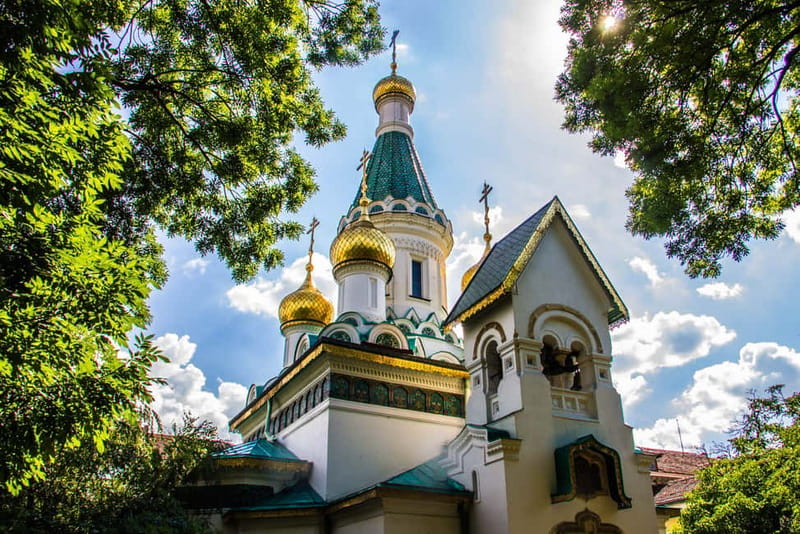
After the Roman segment, the tour shifts firmly into central Sofia. You’ll visit the city’s symbol, Alexander Nevski Cathedral, and then continue through the layers tied to nationhood and governance.
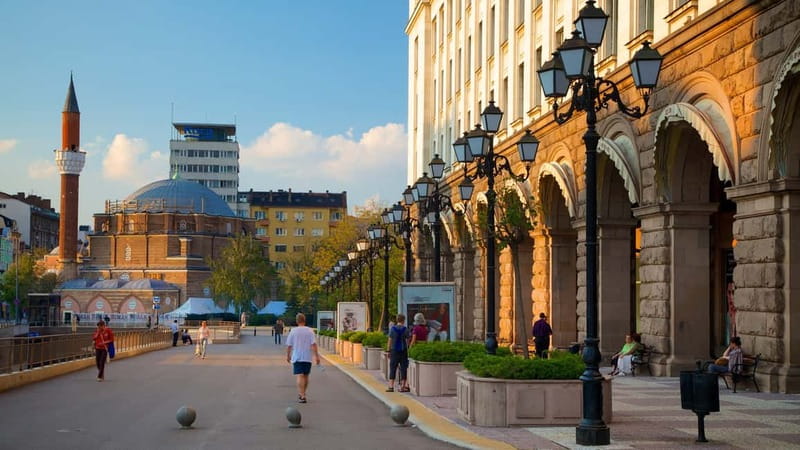
From there, the itinerary points you toward sites like the monarchy palace, Sofia University’s main building, a piece of late 19th-century art, and the parliament. It also takes you to the Communist administrative center, which is arguably the most “political” part of the walk.
What I like about this approach is that it prevents the architecture from becoming wallpaper. You see a cathedral, yes, but you also see how later eras chose monumental styles to project authority. That is especially true when you move from monarchy-era power to Communist-era administration.
Alexander Nevski Cathedral
This is one of those buildings you can appreciate even if you don’t know the religious history in advance. The guide’s value here is connecting the cathedral to how Sofia branded itself as a national capital.
Sofia University and the late-19th-century art reference
The university stop helps you see Sofia as an education and identity hub, not only a government town. And the late 19th-century art note matters because it anchors the period when Sofia’s urban look started locking into something more modern.
Parliament and Communist administration
When the day moves to the Parliament area and the Communist administrative core, you should pay attention to scale and placement. The tour framing makes it easier to understand why these buildings dominate sightlines and why that dominance still shapes how you experience the streets.
A practical note: you’ll be walking, so if you tend to get tired mid-day, pace yourself. Drink water when you can, and take your time at the major stops so you’re not sprinting between photos.
Sofia History Museum: How Sofia Became The Country’s Center
The tour includes one museum stop in the city center: the Sofia History Museum. Here, the focus is the 20th-century monarchy period, with the big idea being that Sofia became the center of the country. You’re not just looking at objects, you’re learning why power and identity concentrated here.
This matters if your goal is to understand Sofia as a whole, not a set of tourist spots. Monarchy-era Sofia helps explain the growth that leads to the later political shifts you see in Communist-era buildings. In other words, the museum provides the missing connective tissue.
What you’ll likely enjoy
If you like history told with context, this stop is one of the best places to slow down. It breaks the “walk and look” rhythm and gives you a chance to absorb the political story in a more structured way.
A small flexibility perk
One of the best practical details tied to guides on this day is that there can be room for a small adjustment if time allows. A guide on this route has reportedly been able to manage a spontaneous detour to a museum of a choice during the day. If you have a particular museum itch, it’s worth asking politely early, since timing is tight on a 9-hour itinerary.
National History Museum At The Former Communist Residence
After you finish exploring the center, you drive to Sofia’s outskirts for the main Communist-era residence site, where the National History Museum operates today. This is a key stop because it turns Communist monumental architecture into a gateway for much older stories.
The museum’s collections cover over 13,000 years of history in the region, stretching from early civilizations through the Ottoman Empire and into modern Bulgaria. That time span is exactly what you want on a day tour, because it prevents the day from feeling trapped in one era.
The medieval artifacts focus
A standout area highlighted in the tour description is the medieval collection, including weapons, armor, and religious icons from the Bulgarian Middle Ages. This is especially useful if you’ve been seeing cathedrals and churches earlier, because it gives you material culture to match the architecture.
Why this museum works after the center walk
When you visit the administrative core and Parliament earlier, you’ve got a modern political frame in your head. Then the National History Museum broadens the timeline and shows how Bulgarian identity is built from layers, not only from 20th-century events. It’s a good reset.
If you’re a fast reader of labels, you’ll enjoy skimming widely. If you’re slower, you might focus on the medieval section and a few standout eras and let the rest be background. Either way, the museum gives your brain a full story arc.
Boyana Church: UNESCO Frescoes And Medieval Art That Still Feels Human
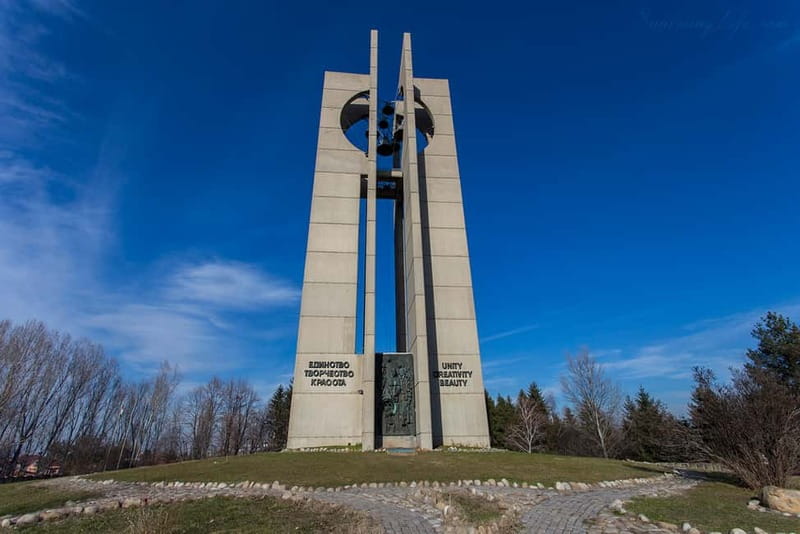
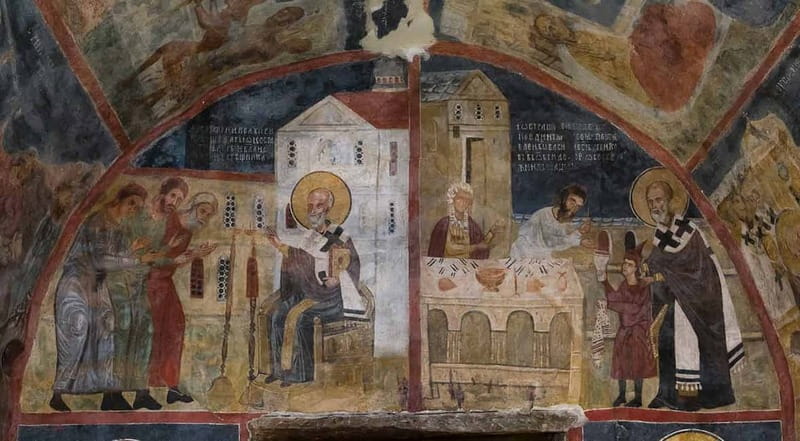
Then comes the stop that many people remember longest: Boyana Church. It’s described as one of the finest examples of medieval Balkan art. The church was built in the late 10th century, and what makes it famous is the 13th-century frescoes.
This is not the kind of church where you just look up and move on. The fresco cycles and the portraits are the whole point. The tour description notes that frescoes depict scenes from saints’ lives and also include portraits of Bulgarian nobles and church dignitaries. That human element makes the art feel less like museum content and more like people who lived nearby.
Architecture you can actually notice
The interior and architectural approach are also part of why it’s special. The church combines Byzantine and Bulgarian elements. The tour notes the interior is divided into three parts, each with its own feel, with columns and a ribbed ceiling in the nave, detailed decoration on the apse semi-dome, and frescoes in the narthex that connect the secular and religious worlds.
How to get the most out of it
Go in ready to look slowly. With a small group and a guide, you can usually get help spotting the fresco themes without feeling rushed. If you’re into medieval art, this is the day’s highest concentration of “see, then understand.”
Also, since this is a late-day highlight before the drive back, keep your energy for the viewing itself. It’s worth it.
Park The Bells: A Cold War Story Told Through Childhood
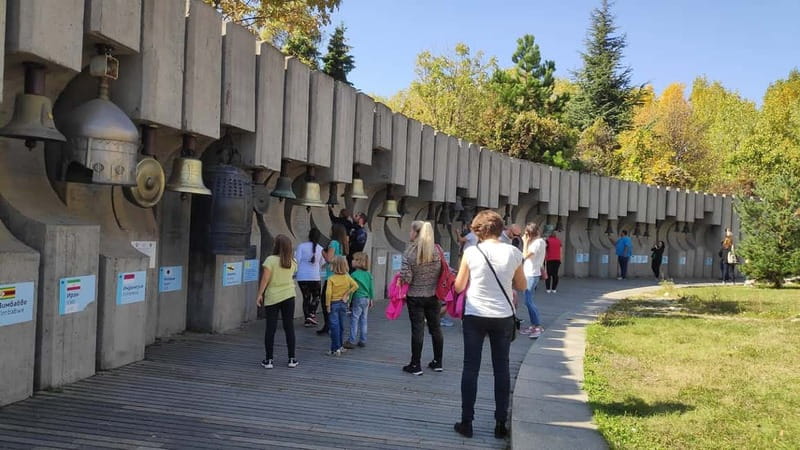
Before heading back to Plovdiv, the tour stops at park The Bells. The story here is unusually moving for a monument stop. The park was constructed in 1979 by the daughter of the last Communist leader of Bulgaria, through an initiative called The Flag of Peace, where children from both sides of the Iron curtain met and made bells that are presented in the park.
This isn’t one of those political monuments that only makes sense if you already know the backstory. The tour frames it as a human-scale moment, anchored in the idea of childhood diplomacy.
Why it belongs in this itinerary
After museums and churches, you might expect the end of the day to be pure “history blur.” Park The Bells helps you close the loop. You’ve seen how governments and empires shape cities. Now you see how ordinary people, especially kids, were used in symbolic peace efforts.
It’s also a nice contrast to the architectural scale of Communist administration. The park feels like a breather, even if you’re still walking a bit.
Price And Value: What $104 Covers On A 9-Hour Day
The price is $104 per person for a 9-hour tour, and I think the value depends on what you want to avoid. If you’re the type who hates organizing transportation, buying separate tickets, and trying to coordinate a Roman site, a church, and two museums in one day, then this package makes sense.
Here’s what you get included: hotel pickup and drop-off in Plovdiv, a highly educated professional guide, entrance fees, and transportation in a modern vehicle. That’s a lot of friction removed in one go.
Food and drinks are not included, so you’ll want to handle that yourself. The rest is covered, which means your money goes directly to access and interpretation, not logistics.
Is it worth it? For me, it’s a strong yes if you want the full arc: center sights, Serdica ruins and historic churches, plus UNESCO Boyana, plus a major museum day. If you only care about one of those chunks, you might prefer a shorter or more focused outing.
Who Should Book This Tour (And Who Might Not)
This tour is a great fit if you like history that connects physical places to real timelines. You get a Roman anchor, Byzantine-Bulgarian medieval art at Boyana, and the 20th-century story of Bulgaria through Sofia’s national role and Communist architecture.
It also fits couples and solo travelers because the small group size helps the guide keep things coherent. In one documented experience, the guide even helped with photos, which tells me the atmosphere can be friendly and practical, not stiff.
You might skip it if you’re very sensitive to long walking days. You’ll be doing about 3 hours of walking in the center, plus time in churches and museums, and you have a drive day overall. If you want more downtime, plan a slower day around it.
Should You Book This Sofia Day Tour From Plovdiv?
I’d book it if you want Sofia with context, not just postcard stops. The strongest reasons are clear: Boyana Church, the Roman Serdica-related stops, and the way the day ties monarchy-era and Communist-era sites into a single story you can actually follow.
I’d reconsider if your priorities are narrow or if you dislike structured long itineraries. Since food is not included, you also need to be comfortable handling meals on your own.
If you want a guided, small-group day that covers the big pillars of Sofia without you doing the planning math, this is a very sensible choice.
FAQ
What time does the tour start and how long is it?
It starts with pickup from your Plovdiv hotel or address at 09:00 and lasts about 9 hours.
Is hotel pickup and drop-off included?
Yes. You get hotel pickup and drop-off in Plovdiv.
What’s the group size?
The group is small, limited to 8 participants.
What language is the tour guide?
The live tour guide speaks English.
Are entrance fees included?
Yes. Entrance fees are included.
Is food included?
No. Food and drinks are not included.
What are the main sights on the itinerary?
Key stops include Sofia’s city center sights, Roman remains linked to Serdica, the Sofia History Museum, the National History Museum at the former Communist residence, Boyana Church (UNESCO), and Park The Bells.
What should I bring?
Bring comfortable shoes, since you will be walking for multiple hours.
Is there a cancellation policy?
The tour offers free cancellation up to 24 hours in advance for a full refund.
Written up most recently in Plovdiv
- Koprivshtitsa History and Architecture: From Plovdiv★ 5.0 · 3 reviews
- Private Horse Riding in Rhodope Mountains from Plovdiv★ 4.0 · 3 reviews
- Full Day Tour to Koprivshtica and Starosel Thracian Tomb★ 5.0 · 3 reviews
- Plovdiv – Buzludzha and the Thracian kingdom valley★ 5.0 · 3 reviews
- Plovdiv Roman Sights Self-Guided★ 4.5 · 3 reviews
- Transfer Plovdiv to Sofia airport/city with a car 3+1★ 5.0 · 3 reviews
- Zip Line & Via Ferrata Experience in the Rhodope Mountains★ 3.5 · 3 reviews
- Tour from Plovdiv to Bachkovo,Asen Fortress and Wonderful Bridges★ 5.0 · 4 reviews
Plovdiv Tours, compared.
Bachkovo Monastery, Asen Fortress, & Bridges Tour
Read our review →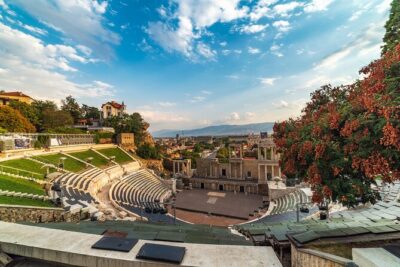
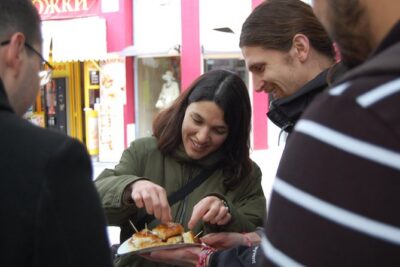
Food Walk: Bulgarian Food and Culture Tour in Plovdiv
Read our review →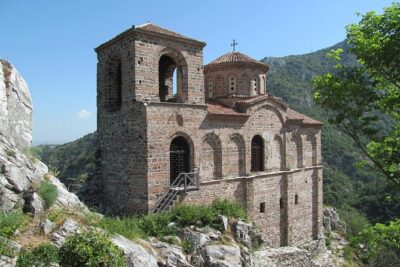
Wonderful Bridges-Bachkovo Monastery-Assen’s Fortress – day tour from Plovdiv
Read our review →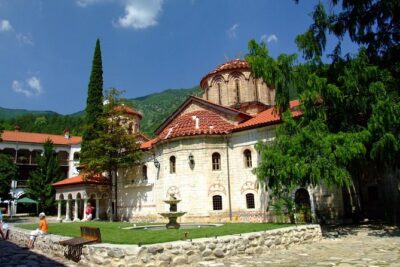
Bachkovo Monastery & Asen’s Fortress – day tour from Plovdiv
Read our review →
Browse the lists this tour appears in