
Reviewed · WALKING TOURS
Plovdiv: Guided Walking Tour
Plovdiv is the kind of city where eras overlap in real time, Roman stone a short walk from 19th-century Bulgarian façades. I love the way the Ancient Roman Theatre keeps its show-going identity, and I love the Revival District streets full of color, carved detail, and photo-ready doors. The main drawback is physical, you’ll cover cobblestones and some uphill, so it is not a sit-and-see stroll.
In 2 hours, you’ll get clear context from a live guide, and you might even hear the route described by people like Bibiana or Sonya. You do not need special knowledge to enjoy it, but you should come with comfortable shoes and a bit of curiosity about how Thracians, Romans, Byzantines, Ottomans, and modern Bulgarians shaped this place.
Key highlights worth planning around
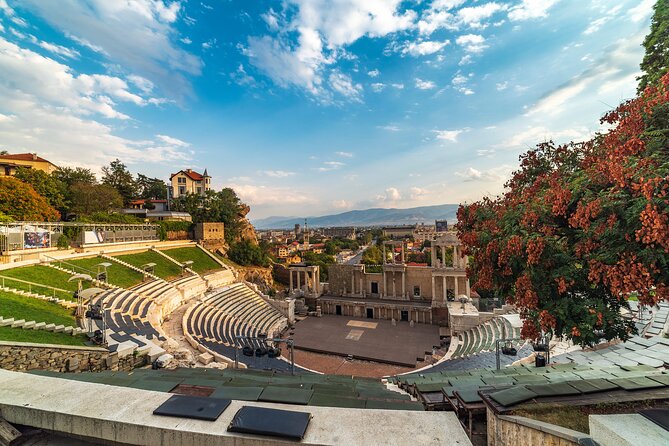
- Ancient Roman Theatre, still used today, plus an easy mental picture of what performances looked like nearly 2,000 years ago
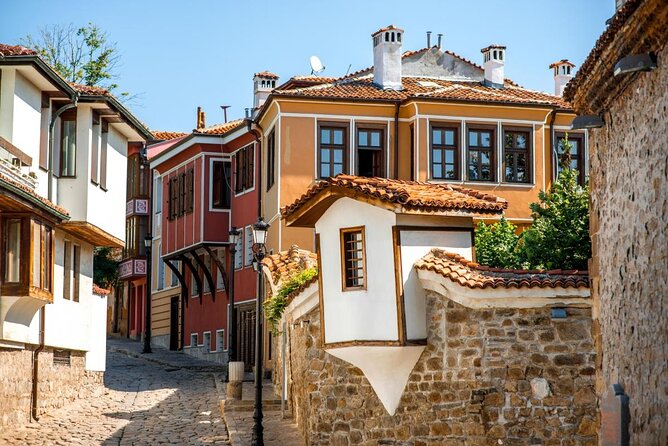
- Revival houses in the Old Town, with eye-catching decorations that are best seen at walking speed
- Kapana Creative District (The Trap), where arts, workshops, and street art show up between cultural stops
- The longest pedestrian street in Europe, a practical route for breaks, photos, and café stops on your own
- Thracian fortress hill views, the payoff moment after walking uphill
- A guided narrative that connects layers of rule and faith, from Roman sites to churches and mosques
Plovdiv in 2 hours: what makes this walking tour work
This is a short tour with a big job: give you a sense of Plovdiv as an old city that never fully “stopped.” The place is one of the oldest continuously inhabited cities on Earth, with roots that reach back to around 4,000 BC. On a normal trip, that kind of timeline can feel like random facts. On this walk, it clicks because the guide keeps tying what you see to what came before.
You get a compact mix of Roman athletics and drama, Revival-era home architecture, and modern creative-culture energy in Kapana. The route also takes you toward a hilltop viewpoint, which matters because Plovdiv’s layers are easier to understand once you can look down and see the city’s shape.
This tour is priced at $14 per person for about 2 hours with a live guide. That makes it a strong “first Plovdiv” option, especially if you want history and architecture without spending a whole day on logistics.
More Walking Tours in Plovdiv
- Private city walking tour of Plovdiv
★ 5.0 · 65 reviews - Food Walk: Bulgarian Food and Culture Tour in Plovdiv
★ 5.0 · 35 reviews - Plovdiv guided walking tour
★ 5.0 · 31 reviews
Getting your feet ready: cobblestones, slopes, and sensible packing
You should expect cobblestone streets and at least some incline. That’s not a minor detail here, it’s the difference between enjoying the walk and thinking about your knees the whole time. Comfortable shoes are essential, and I’d treat this as a light hike with cultural stops, not a flat city stroll.
If you’re visiting in winter and weather is doing its thing, bring an umbrella. I’m not making this up as a general travel tip, there’s real value in having rain gear because the tour still keeps moving through streets and alleys.
A bottle of water is also a good idea. Even with frequent pauses for photo moments and explanations, your pace will be walking uphill and downhill enough that you’ll feel it.
Ancient Roman Theatre: the stone seats that still matter
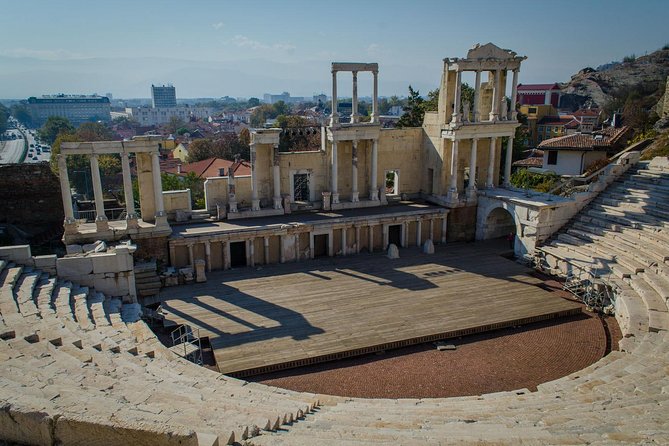
The star stop for many people is the Ancient Roman Theatre. It was built in the 1st century AD, and the important practical detail is that it’s still in use today. That means the site is not just a ruin you look at, it’s a place where performances and events can happen, giving you a sharper sense of how Roman public life operated.
As you stand in and around the theatre, the guide’s job is to help you visualize scale and purpose. You’re looking at stone seating and a space designed for crowds, acoustics, and spectacle. Even if you do not catch an event during your visit, you can still connect the dots quickly when someone explains what would have taken place here nearly 2,000 years ago.
Photo-wise, you’ll get more than one good angle because the theatre sits in a way that lets you frame both the structure and surrounding city views. The drawback is timing and pace, this stop happens within a 2-hour route, so you won’t have hours to linger. Go in ready to observe, take photos, and then move on.
Roman Stadium remnants: athletic life under Rome
Not every Roman site is about performances. This walk also includes the Roman Stadium remnants, used for athletic competitions and public events. What you see is partially preserved, so the value is not in full walls or a restored complex. The value is in understanding the function of a place built to manage crowds, movement, and spectacle.
This stop is helpful for sorting out how Romans organized public entertainment. If the theatre gives you drama, the stadium gives you sport and civic routine. Together, they give a more complete picture than visiting only one famous site.
Because it is an “remnants” kind of stop, the guide’s explanation matters. If you love history, listen closely to how the guide connects the stadium to Plovdiv’s Roman-era importance. If you just want visuals, you’ll still get plenty, but you’ll enjoy it more with context.
A few more Plovdiv departures leaving the same week
- Plovdiv: Old Town Guided Walking Tour & Audioguide & Museum
★ 4.1 · 17 reviews - Food Walk Plovdiv: Bulgarian Food and Culture Tour
★ 5.0 · 16 reviews - Plovdiv Walking Tour To Old Town And Ancient Roman Landmarks
★ 5.0 · 13 reviews - Plovdiv: 2-Hour Sightseeing Walking Tour
★ 4.9 · 9 reviews
Kapana Creative District: art culture in the same walking day
Kapana is the stop that shifts you from ancient stone to contemporary street life. The name is Kapana, meaning The Trap, which is a fun hook because it sets expectations: this is a place where you follow lanes and corners and end up somewhere interesting.
In practice, you’ll walk through an area known for arts and crafts, with galleries, cafés, workshops, and street art. It is also the kind of district where you can easily lose track of time if you weren’t on a schedule, so having a guide keeps you moving while still letting you feel the neighborhood.
The value here is balance. Roman sites can make a walk feel like a museum. Kapana adds a human layer, you’re seeing how creativity lives on the ground today, not just how it looked in an old book.
If you’re the kind of person who likes to step into places rather than just pass by them, you might want to plan your next stop around Kapana later, after the tour ends. This walk tees up that idea.
The longest pedestrian street in Europe: easy strolling with real city rhythm
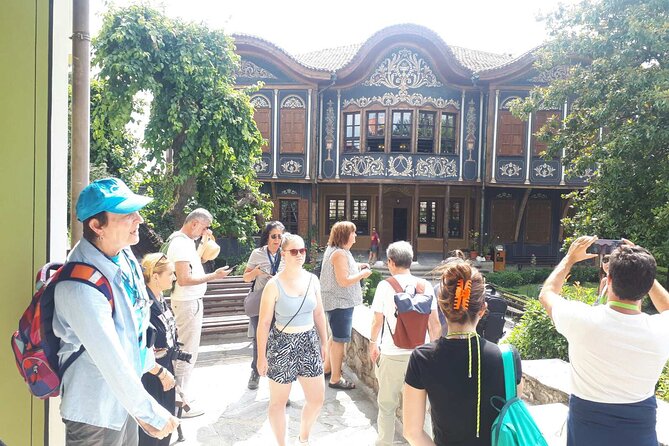
The route includes a walk along the longest pedestrian street in Europe. That’s the kind of claim that sounds like a trivia fact until you experience it, because being pedestrian-only changes the feel. You’re not constantly stepping around cars and buses. Instead, the street becomes a social space, lined with boutique shops, cafés, and cultural landmarks.
For your tour experience, this street is practical. It works as a connector between major stops, and it also gives you a breather moment where you can look around and take photos without climbing.
It’s also where the guide’s stories can land more easily. When you’re moving through lively pedestrian space, you naturally relate the city’s past to its present. Just remember, you’re on a schedule, so don’t get stuck browsing if you still want the hilltop viewpoint.
Bulgarian Revival District: the 19th-century houses that make Plovdiv pop
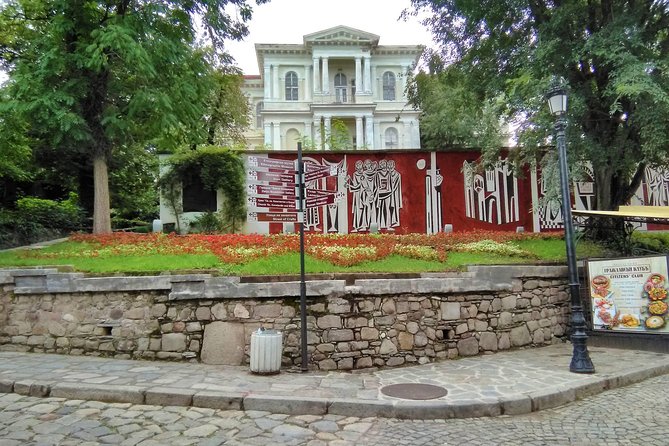
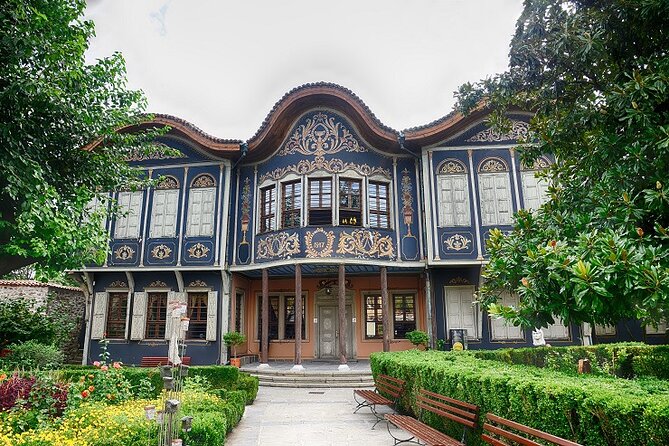
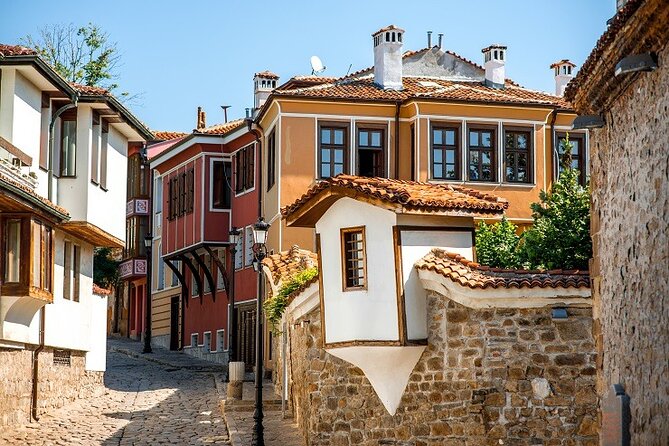
Plovdiv’s Old Town is known for Bulgarian Revival houses from the 19th century. These homes are famous for their colorful façades and detailed decoration. Walking through this area on foot is the key, because the best details are not billboard-sized. They are in the patterns, the carved work, the way the decoration frames windows and doorways.
This part of the tour is also a photo highlight, and it pays off especially if you like architecture more than just monuments. Think of it like this: big Roman sites tell you what empire did. Revival houses tell you what local prosperity, taste, and identity looked like later.
The guide will point out why certain features matter and how the Revival period fit into a city shaped by many powers. The drawback is that streets can be busy with pedestrians and shops, so you might have to wait briefly for a clear shot. Still, it is worth it because the area is where Plovdiv’s personality becomes unmistakable.
Thracian fortress hill: your view reward at the end of the climb
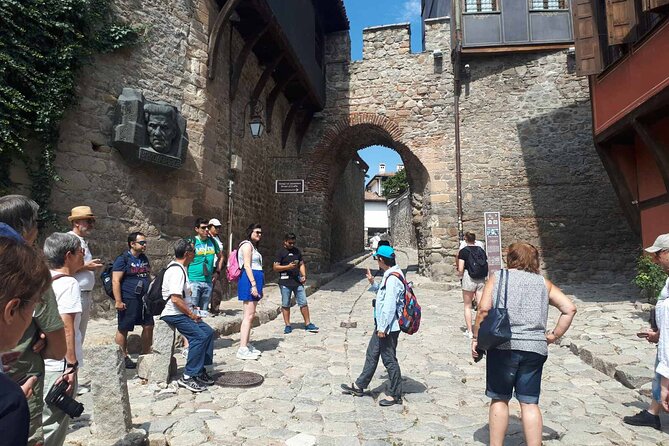
One of the most memorable moments is the hike to the Thracian fortress hill. This is where you earn your views. From higher ground, the city becomes easier to read. You can understand spacing, topography, and why some places look the way they do.
It’s also a mindset shift. When you’re looking down, all the earlier stops feel connected. Roman theatres, Revival homes, and older settlement layers start to make geographic sense rather than feeling like separate attractions.
The consideration is the usual one: expect an uphill component and plan accordingly. If you arrive with sore feet or inadequate shoes, this is the part that will test you. If you’re fine walking, it’s the payoff that makes the entire 2 hours feel worth it.
The guide’s superpower: tying legends to places you can see
A walking tour lives or dies by the guide. With this one, the promise is that you’ll hear legends, historical facts, and anecdotes that turn static sites into a narrative. You’ll also learn how Plovdiv’s multicultural layers connect, including Thracian, Roman, Byzantine, Ottoman, and Bulgarian influences.
You may also pass or stop near ancient churches and mosques and see references to modern art installations along the route. That mix matters because Plovdiv is not just ruins. It is a working city where religions, crafts, and everyday life still sit beside older architecture.
Language options are Italian, Spanish, and English, and that’s a big deal if you’re trying to understand names, dates, and the meaning behind architectural details. If you’re the type of person who loves clarifying small points, you’ll likely appreciate the way a good guide explains what you’re looking at instead of rattling facts.
In recent experiences, people have been impressed by guides like Bibiana and Sonya for being friendly, precise, and informative. That kind of delivery can change the tour from a route into a story you remember.
Price and value: $14 for history, architecture, and a hilltop view
At $14 per person for about 2 hours, this tour is a strong value when you factor in the live guide and the number of major stops. You’re paying for interpretation, not just entry to sites. When you visit ancient places without context, you often end up reading plaques that feel slow and incomplete. Here, you get the context while you are standing in the location.
A key detail: entrance fees are not included, and food is not included. So if you want to eat, plan for your own meal or snack before or after. If any entrance fees apply at specific stops, you’ll handle those separately.
Meeting point can vary depending on the option booked, so check your specific confirmation and arrive with a little buffer time. This is one of those tours where being on time matters because the schedule is built around walking between sites.
Who this tour is best for, and who should skip it
This is a good fit if you want a fast, guided introduction to Plovdiv’s most recognizable highlights: Roman sites, Revival houses, Kapana, the long pedestrian street, and a fortress hill viewpoint. It’s also a great choice if you like photography and architecture, because the route is structured around visually strong streets and façades.
If you are sensitive to walking on uneven surfaces or if your mobility is limited, skip it. The tour is not suitable for people with mobility impairments, and the cobblestones plus incline make that a practical, real-world limitation, not just a label.
Also, if you hate guided tours in general and prefer wandering freely, this might feel too structured. But if you like a route that keeps you from missing connections between eras, it’s a nice compromise.
Should you book the Plovdiv Guided Walking Tour?
Yes, if you want an efficient history and architecture hit in 2 hours and you’re comfortable with cobblestones and some uphill. The best reason to book is the combination: Roman theatre and stadium energy, Revival house artistry, and a Kapana-style modern neighborhood break, topped off with a fortress hill view.
Book it especially if it is your first time in Plovdiv or if you want one guided plan that gives you enough context to explore on your own afterward. And at $14, the cost feels reasonable for what you get, as long as you are fine handling entrance fees and snacks separately.
If you’re expecting a fully flat, casual walk, or if you need step-free access, look for a different option. This one is meant for walking, and the payoff comes from moving through the city.
FAQ
How long is the Plovdiv guided walking tour?
The tour lasts 2 hours.
How much does it cost?
It costs $14 per person.
What is included in the price?
The price includes the guided walking tour.
Are entrance fees included?
No, entrance fees are not included.
Is food included?
No, food is not included.
What languages is the live guide available in?
The tour is offered with live guides in Italian, Spanish, and English.
What should I bring or wear?
Bring comfortable shoes. You’ll walk on cobblestone streets.
Is this tour suitable for people with mobility impairments?
No, it is not suitable for people with mobility impairments.
Where is the meeting point?
The meeting point may vary depending on the option booked, so check your confirmation details.
Written up most recently in Plovdiv
- Koprivshtitsa History and Architecture: From Plovdiv★ 5.0 · 3 reviews
- Private Horse Riding in Rhodope Mountains from Plovdiv★ 4.0 · 3 reviews
- Full Day Tour to Koprivshtica and Starosel Thracian Tomb★ 5.0 · 3 reviews
- Plovdiv – Buzludzha and the Thracian kingdom valley★ 5.0 · 3 reviews
- Plovdiv Roman Sights Self-Guided★ 4.5 · 3 reviews
- Transfer Plovdiv to Sofia airport/city with a car 3+1★ 5.0 · 3 reviews
- Zip Line & Via Ferrata Experience in the Rhodope Mountains★ 3.5 · 3 reviews
- Tour from Plovdiv to Bachkovo,Asen Fortress and Wonderful Bridges★ 5.0 · 4 reviews
Walking Tours, compared.
City Monuments Guided Walking Tour with Audio Guide
Read our review →
Sofia Highlights 2 Hour Sightseeing Walking Tour
Read our review →

Seven Rila Lakes Snowshoe Walk & Thermal Spring Pools
Read our review →Browse the lists this tour appears in