
Reviewed · COMMUNIST HERITAGE TOURS
Sofia: Communist History Walking Tour
Sofia has a gift for making the past feel physical. This walking tour threads you through imposing communist-era buildings and major public sites, so the story lands in your eyes, not just your ears. I like the stop at Monument to the Soviet Army in Borissova Garden, and I like how the guide ties the architecture to what life looked like under the regime. One thing to consider, it is history-forward, so if you want a lot of churches and art, this is more about political design than pretty lanes.
You’ll cover the city center at a steady pace in about 3 hours, with a plan that keeps moving. The tour ends with a practical option to buy communist-style relics at an antiques market near Alexander Nevsky Cathedral, not from a dedicated shop. If that shopping element is a must for you, bring a bit of cash and expect it to be hit-or-miss on what you can find.
Key things I think you’ll really notice
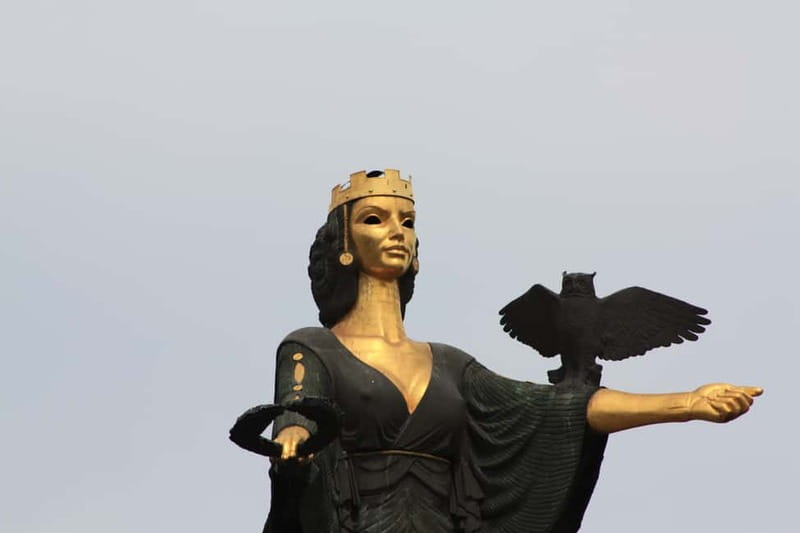
- Borissova Garden’s Soviet Army monument gives you a clear visual anchor for the era.
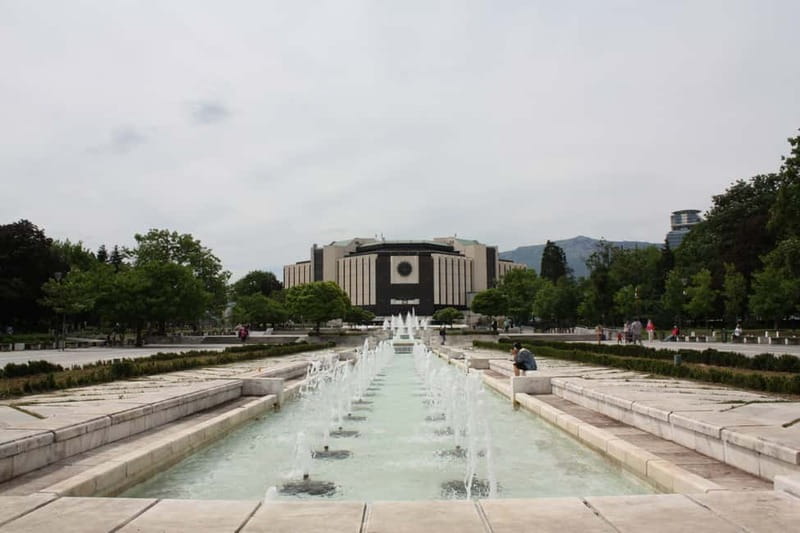
- National Palace of Culture is a major architectural stop, with the context of a huge congress hall.
- A piece of the Berlin Wall links Bulgaria’s 1989 turning point to a very specific moment in European history.
- TZUM (Central Department Store) shows where the elite shopped, not just what was built.
- Vitosha boulevard and the former Communist Party headquarters help you map power onto the city.
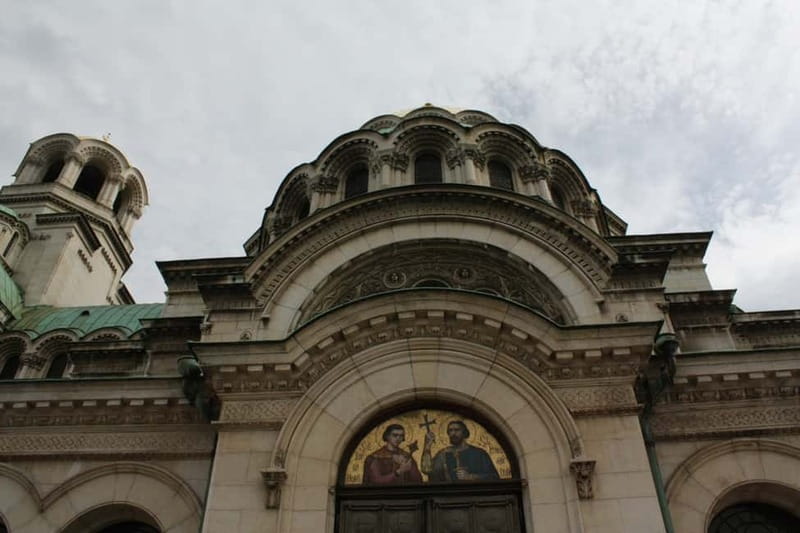
- Antique market relic shopping near Alexander Nevsky Cathedral is the closest thing to memorabilia browsing during the walk.
Sofia’s communist architecture still shapes what you see
What makes this tour work is that it treats buildings like documents. You do not just pass landmarks, you learn how communist power used public space, grand construction, and everyday commerce to project control and confidence.
Walking helps. The city center layout forces you to notice scale. You’ll feel the difference between standard streets and ceremonial avenues, between normal storefront life and the kind of big, formal retail that signaled status. That is why I think you’ll come away with clearer mental maps of Sofia, even after a short 3-hour visit.
Also, this is built for an English-speaking group experience with a real live guide. In one set of experiences, the guide was named Jordan, and that name matters because the feedback I’m taking from the tone of those reports is consistent: Jordan spends time on how the era worked and what the architecture was trying to communicate.
More Historical Tours in Sofia
- Full-day Nis and Serbian History Tour from Sofia
★ 4.5 · 90 reviews - Sofia: History and Heritage – Small Group City Tour
★ 5.0 · 84 reviews - Sofia Communist History 2-Hour Tour in a Classic Trabant
★ 5.0 · 45 reviews
Meeting point and pacing through the center
The tour starts at the Tourist Information Center, bul. Tsar Osvoboditel 22. That is helpful if you are trying to orient yourself, because it is a straightforward landmark to plan around before you start walking.
The total time is 3 hours. That is a sweet spot for this theme. Long enough to see multiple stops with context, short enough that you are not stuck in “tour time” all day. If you prefer shorter tours that still feel complete, this fits that style.
If you have walking limits, there is a public transportation ticket included if needed. You might also ride a trolley bus with locals if it helps get between points. That detail matters because you get both the monument view and a quick slice of ordinary city movement, instead of only admiring from the sidewalk.
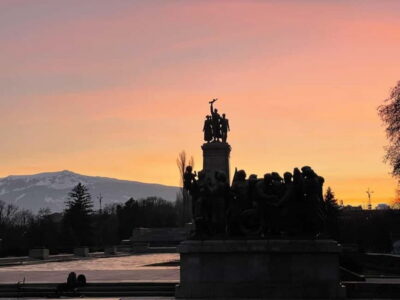
Borissova Garden and the Monument to the Soviet Army
This is one of those stops where the size and intent hit you fast. The tour includes the Monument to the Soviet Army in Borissova Garden, which acts like a visual key for everything you will see later.
I like that this stop is not treated like a quick photo moment. It is a place to understand how Soviet influence was publicly displayed. Even if you already know the broad timeline, seeing the monument in its setting helps you understand why these symbols were built where they were.
Practical tip: wear shoes that handle city sidewalks and garden paths. You’ll be outside most of the time, and the garden surroundings mean surfaces can shift from paved to textured depending on where you walk for the best viewing angle.
National Palace of Culture, the big congress hall moment
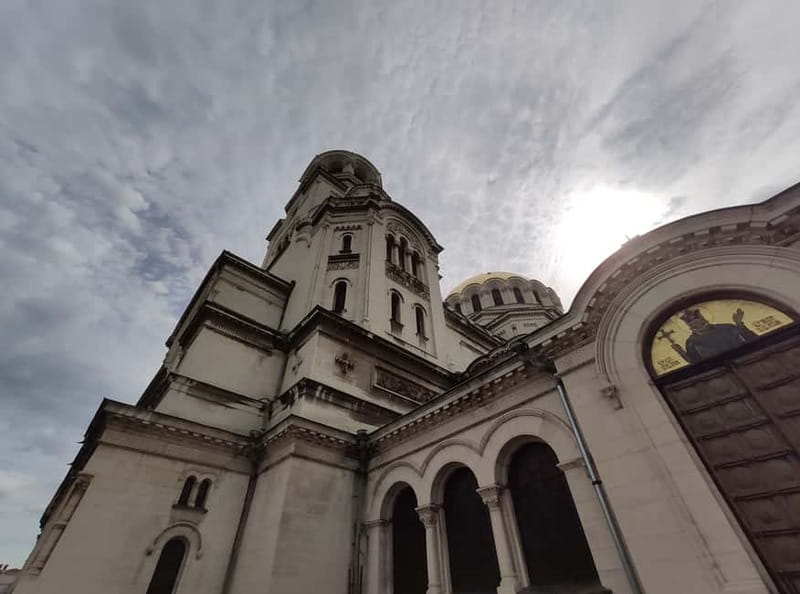
From the garden, the tour continues to the National Palace of Culture, described as the largest congress hall in the Balkans. That single detail changes how you read the building. It is not just another impressive structure, it is designed for gatherings, official speeches, and big public events.
Why it is valuable on a short tour is simple: the building tells you that the communist era aimed for scale. In other words, this was not only about private life. It was about controlling public events and the feeling of collective importance.
This stop also connects directly to a major historical anchor included on the walk, a piece of the Berlin Wall. That link turns the architecture into a timeline tool you can carry in your head as you move on.
More Walking Tours in Sofia
- Sofia: Communist Walking Tour
★ 4.9 · 1,106 reviews - Sofia: City Monuments Guided Walking Tour with Audio Guide
★ 4.5 · 825 reviews - Communist Walking Tour of Sofia
★ 5.0 · 690 reviews - Sofia Highlights 2 Hour Sightseeing Walking Tour
★ 5.0 · 442 reviews
The Berlin Wall piece and the 1989 turning point
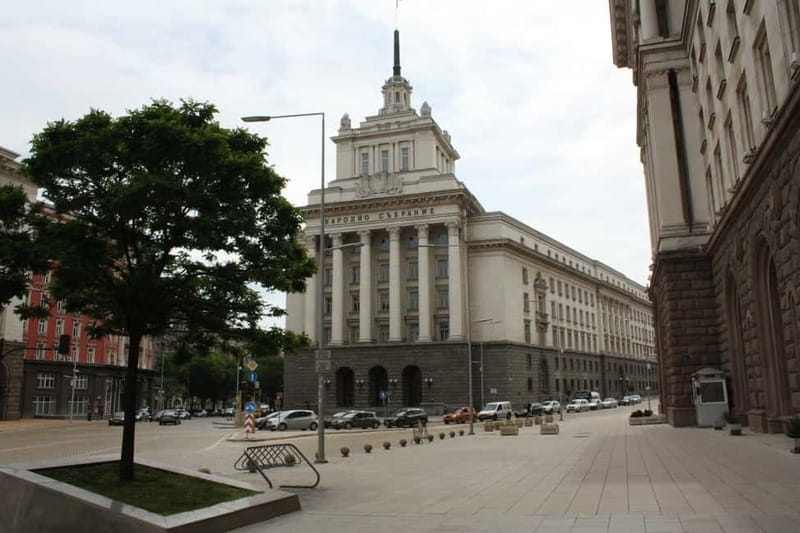
The tour includes a piece of the Berlin Wall, and it adds a precise timing connection: it fell just one day before radical changes that happened in Bulgaria in 1989.
Even if you do not plan to study Cold War dates, this timing is the kind of detail that makes history feel concrete. The message is not abstract. It’s chronological, and it gives you a sharp “then and now” feeling as you continue across Sofia’s built environment.
If you like guided explanations that make events connect to geography, this is a highlight. You will likely find yourself thinking differently about the nearby official buildings after you hear how the timeline ties together.
Vitosha boulevard and the former Communist Party headquarters
Next, the walk moves toward Vitosha boulevard. This is where the tour starts to feel like city theater. You are not only seeing monuments, you are getting a sense of where political power chose to stand and how it shaped the urban flow around it.
The tour includes the former headquarters of the Communist Party on Vitosha boulevard. That matters because it connects the era’s authority to a real street you can picture later, even if you forget the exact name of the building. It gives you a practical map of “where power lived,” rather than only “what power built.”
This part of the route also sets up what comes next, the shopping stop. That combination is smart, because it shifts your focus from ideology and events to daily life signals.
TZUM, Central Department Store, and what elites meant
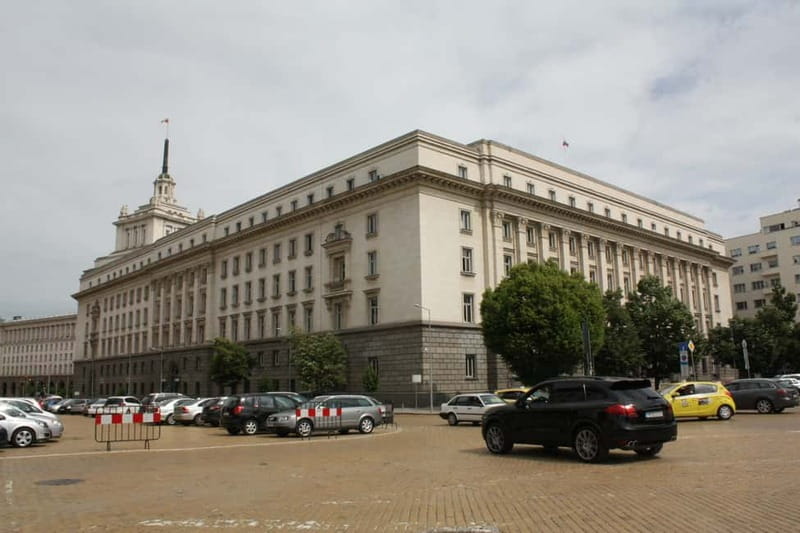
The tour includes the Central Department Store, known as TZUM. It is positioned as an upmarket shopping place, where the elite would shop.
This is one of the more interesting turns in the whole walk. Communism is often discussed as politics first, but this stop reminds you that class signals and consumer identity still matter, even when official messaging claims equality. Here, architecture and retail layout do the talking.
If you enjoy people-and-power details, you’ll probably appreciate this. It reframes the walk from “just monuments” into something more about how systems shaped everyday choices.
Georgi Dimitrov Mausoleum site on Prince Alexander of Battenberg Square
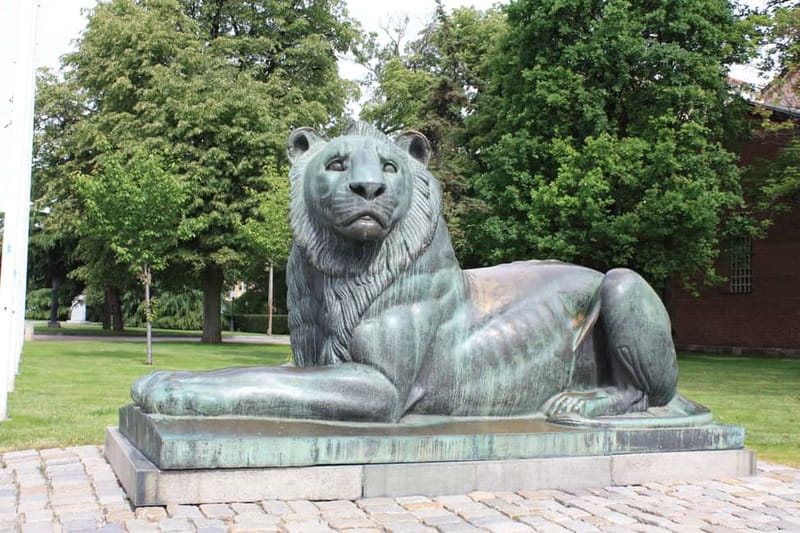
Then you reach the site of the former Georgi Dimitrov Mausoleum on Prince Alexander of Battenberg Square. This is a heavy stop by design. A mausoleum site is a kind of final statement, and it shapes the way you read surrounding public space.
On a short tour, the key is how the guide frames the location. The value here is that you are not only looking at where something stood. You are connecting it to the era’s public language about leadership and memory.
Practical tip: take a moment to step back and look at the square as a whole. These types of locations are meant to be viewed at distance, not just from a sidewalk edge.
End at the antiques market near Alexander Nevsky Cathedral
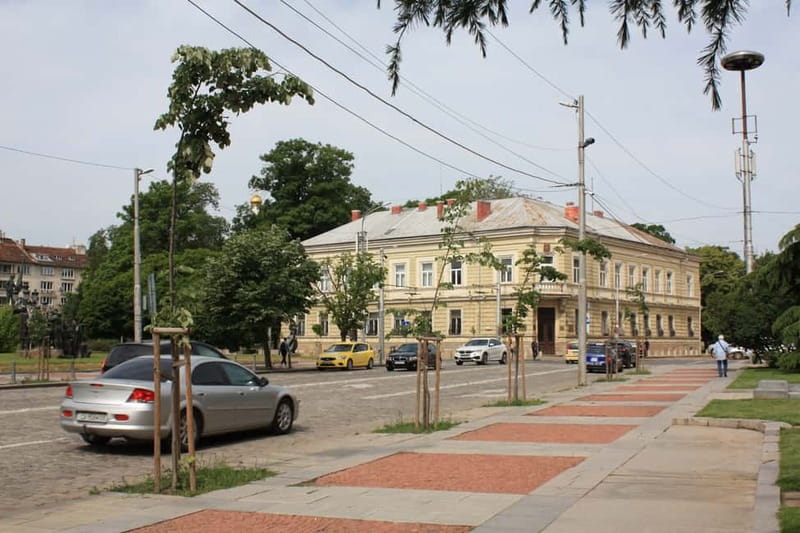
The walk ends at an antiques market outside Alexander Nevsky Cathedral. This is where the tour becomes hands-on, because it includes time to purchase communist relics.
This is also where one review point becomes especially useful. There are not many dedicated Soviet memorabilia stores popping up along the route itself. So the antiques market stop is not an extra add-on, it is the main practical chance to find something to take home.
My advice: treat it like vintage browsing. Prices and selection can vary. Have a rough spending limit and focus on items that look meaningful to you, not on chasing a perfect label.
Even if you do not buy anything, the end spot works because Alexander Nevsky Cathedral is a well-known visual anchor. You finish the tour near a place you’ll likely want to see anyway, which makes the timing convenient.
Price, value, and who this tour fits best
This tour costs $140 per person and lasts 3 hours. For Sofia, the value is the combination of (1) an English live guide, (2) multiple major official stops tied to a single theme, and (3) the inclusion of public transport ticket coverage if needed for walking problems, plus the option of a trolley bus ride if it helps connect points.
Where this price feels fair is if you want more than a sightseeing walk. You are paying for interpretation, and the feedback I’m leaning on here is that the guide experience made a difference. In particular, Jordan got strong marks for being informative and for bringing clarity to communist rule and Bulgarian context.
Who should book:
- You want a structured overview of the communist era through buildings and public sites
- You like architecture when it has a story tied to politics and public life
- You want a short, focused walk that covers a lot of center-of-city stops
- You might enjoy buying a small souvenir relic at the end
Who might skip:
- If you want a tour packed with food stops and lots of flexible time for shopping
- If you only want churches and medieval highlights, this may feel too political
What the group setup feels like in real life
This is listed as a private group. That usually means you can hear the guide better and ask questions without feeling like you are shouting over a crowd.
The tour also runs in English. So if you can manage basic listening, you’ll get the most out of the context at each stop, especially at the monument, the Palace of Culture, and the Berlin Wall component.
One more practical note: since food and drinks are not included, plan to treat the tour like a segment of your day. I’d either eat before you go or plan to stop afterward.
Quick practical FAQ
FAQ
Where is the meeting point for the Sofia Communist History Walking Tour?
Meet at the Tourist Information Center, bul. Tsar Osvoboditel 22, Sofia.
How long is the tour?
The tour lasts 3 hours.
Is the tour in English?
Yes, the live guide speaks English.
What is included in the price?
The tour includes an English-speaking guide and a public transportation ticket if needed for people with walking problems.
What is not included?
Food and drinks are not included, and there is no hotel pickup or drop-off.
Is there an option to cancel for a refund?
Yes. You can cancel up to 24 hours in advance for a full refund.
Should you book this tour?
I’d book it if you want Sofia’s communist era explained through the places you can actually stand in and see. The stop selection is strong and logical, from the Soviet Army monument in Borissova Garden to the Palace of Culture, the Berlin Wall piece, the former Communist Party headquarters, TZUM, and the mausoleum site, then finishing with relic browsing near Alexander Nevsky Cathedral.
If you are on the fence, make your decision based on your goals. If you want a guided, theme-based walk with context and a clear route in 3 hours, this delivers. If you want mostly leisurely walking with optional stops and plenty of time to wander freely, you might feel a bit “guided” the whole way.
More of the Same Era, Told Straight
- Sofia: Museum of Socialist Art and Buzludzha Monument Tour
★ 4.9 · 86 reviews - Sofia Food & Tasting Tour with Communist-Era Tram Ride
★ 5.0 · 35 reviews - Buzludzha Monument and the Museum of Socialist Art
★ 5.0 · 25 reviews - Sofia: Private Communist Jeep Tour
★ 5.0 · 22 reviews
Written up most recently in Sofia
- Small Group Tour to Belogradchik Fortress&Venetsa Cave from Sofia★ 5.0 · 3 reviews
- Rila Mountain Winter Day Trip★ 5.0 · 3 reviews
- Private Sofia Half Day Eco Tour★ 4.4 · 3 reviews
- Private Winter Day Trip to the Rila Mountain★ 4.5 · 3 reviews
- Lovech, Devetashka cave and Krushuna waterfalls★ 5.0 · 3 reviews
- From Sofia The Beauty of the Countryside and a Homemade Lunch★ 5.0 · 3 reviews
- Bulgaria and Serbia Full Day Tour from Sofia★ 5.0 · 3 reviews
- Private tour to Rila monastery, Wine degustation, Boyana church★ 4.5 · 3 reviews
Communist Heritage Tours, compared.
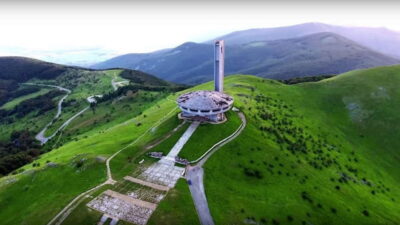
Museum of Socialist Art and Buzludzha Monument Tour
Read our review →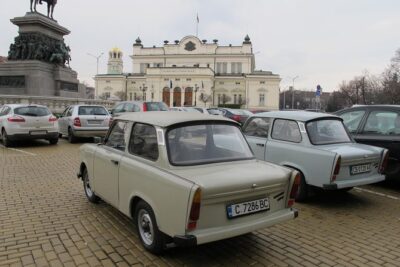
Sofia Communist History 2-Hour Tour in a Classic Trabant
Read our review →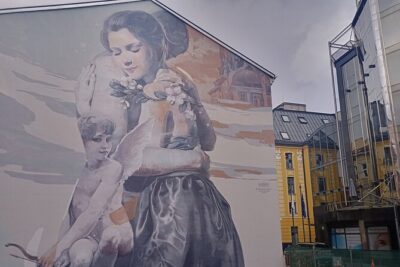
Sofia Food & Tasting Tour with Communist-Era Tram Ride
Read our review →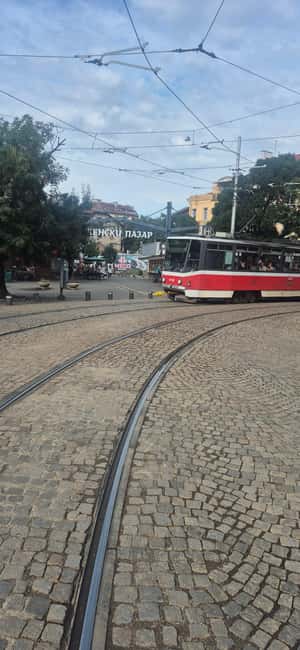
5-Stop Food & Culture Tour by Communist-Era Tram
Read our review →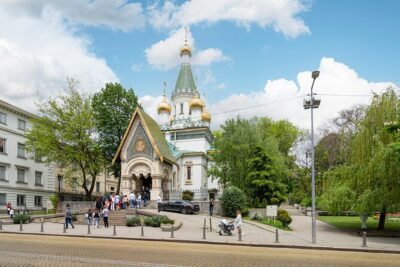
Explore Bulgaria’s COMMUNISM Era – Todor Zhivkov DayTrip from Sofia
Read our review →Browse the lists this tour appears in